
Sump Pump Backup System Cost Explained
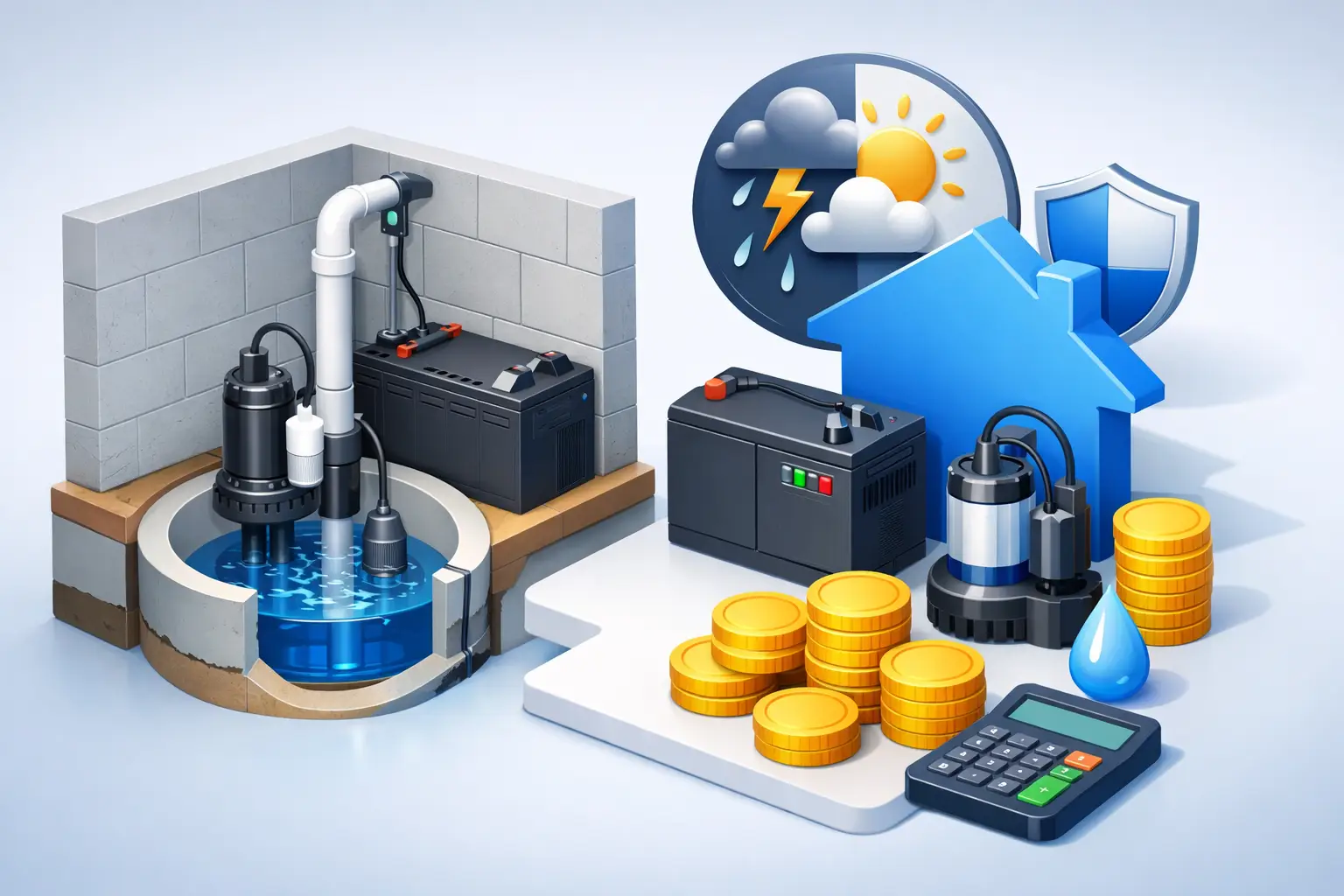
A backup sump system usually gets serious attention right after a storm, a tripped breaker, or a primary pump failure. That is also when sump pump backup system cost starts to matter in a very practical way - not as a line item, but as the difference between a protected basement and a cleanup bill.
For most buyers, the real question is not just what a backup system costs. It is what level of protection you are actually buying, how long it will run when the power is out, and whether the components are matched correctly for the application. A low upfront price can look attractive until you factor in battery runtime, charging performance, controller quality, and replacement compatibility.
What affects sump pump backup system cost?
The biggest cost driver is system type. Battery backup systems are the most common choice for residential sump pits because they are designed to keep pumping during a power outage or when the primary pump cannot keep up. Within that category, prices vary widely based on the charger-controller, the pump design, and the battery capacity.
A basic backup package may include the pump, charger, controller, and alarm-ready functionality, but not the battery itself. More complete systems may be pre-plumbed or bundled with a specific battery configuration. That distinction matters because buyers sometimes compare two systems at very different price points without realizing one is missing a major component.
Battery type also changes the number quickly. A smaller marine-style or entry-level battery lowers the initial purchase price, but it may not provide the runtime needed during a long outage or sustained groundwater event. AGM and other higher-performance battery options generally cost more upfront, but they can offer better reliability, less maintenance, and more predictable backup performance.
The controller is another major factor. In lower-end products, controls are often treated as an accessory. In a serious backup system, the controller is central to how the system charges, monitors battery condition, activates alarms, and manages switching between primary and backup operation. Better control logic usually means a higher price, but it also reduces the chance of finding out too late that a battery was not charged or a fault went unnoticed.
Typical price ranges for backup systems
For residential buyers, a complete sump pump backup system cost often falls into a few broad tiers. Entry-level systems may start in the several-hundred-dollar range before battery selection and installation are added. Mid-range systems with stronger controls, better pumping performance, and more dependable battery options often land higher. Premium systems, especially those built around specialized controllers or pre-engineered packages, can move well past that point.
In practical terms, many homeowners end up spending somewhere between about $700 and $2,000 for equipment, depending on the system design and battery configuration. Installed cost can rise beyond that if plumbing modifications, discharge changes, or electrical work are required. For larger homes, commercial settings, or high-inflow basins, the number can increase further because the backup system needs to be matched to a more demanding duty cycle.
That range is broad because backup systems are not interchangeable. A shallow occasional seepage problem is very different from a finished basement with frequent water intrusion and a high cost of failure. The right comparison is not cheapest versus most expensive. It is expected water volume, runtime needs, and system reliability versus total cost.
Equipment cost versus installed cost
One of the most common budgeting mistakes is focusing only on the box price. Equipment cost is only part of the total. Installation can be straightforward when replacing a compatible backup pump in an existing setup, but it can become more involved when adding a backup for the first time.
A typical installation may include mounting the backup pump, adding the discharge connection, integrating a check valve arrangement, placing the controller, and connecting the battery. If the pit is crowded, the discharge piping is undersized, or the existing primary pump layout is poorly configured, labor time goes up.
Some installations also require cleanup of old components or replacement of worn parts that should not be reused. A failing switch, a questionable check valve, or corroded terminals can undermine the new system. Paying for a better installation often prevents repeat service calls and nuisance failures later.
Why battery selection changes the total price
If you want to understand sump pump backup system cost clearly, start with the battery. The battery is not just an accessory. It determines how long the backup pump can operate and, in many cases, how dependable that operation will be under stress.
A lower-cost battery may be acceptable for short outages and moderate inflow. But if your area sees extended power failures, or your pit cycles frequently during storms, a higher-capacity battery is usually worth the added expense. Runtime is application-specific. The same battery can last a long time in a light-duty event and deplete quickly in a wet basement with frequent pump activation.
Battery replacement planning matters too. Some buyers choose the cheapest possible battery and then replace it more often, which can erase the initial savings. Others prefer a better battery chemistry or larger capacity to support longer service life and stronger backup performance. There is no universal best option, but there is a clear difference between buying for price alone and buying for expected conditions.
Features that raise cost but often improve protection
Not every added feature is necessary, but several are worth paying attention to. Audible alarms and diagnostic indicators can alert you to charging faults, battery issues, or high water conditions before they turn into flooding. Smarter charging systems help preserve battery health. Better switch and sensor design can reduce erratic cycling and improve activation consistency.
Pre-plumbed or packaged systems also cost more in some cases, but they can simplify installation and reduce compatibility problems. That is especially useful for property managers, contractors, and buyers replacing a failed system under time pressure. Matched components usually reduce guesswork.
For technically demanding applications, higher-end systems may justify the price through stronger controls and better serviceability. If you need exact replacement parts later, a specialized product family can be easier to maintain than a pieced-together setup built from mixed components.
When a lower-cost backup system makes sense
There are cases where spending less is reasonable. If the basement is unfinished, the inflow is light, and outages are usually brief, a simpler battery backup system may provide adequate protection. The key word is adequate. It may not be ideal, but it can still be a smart improvement over having no backup at all.
A lower-cost option can also make sense as an interim solution while planning a larger drainage upgrade. For example, if the property needs discharge improvements or basin changes later, a buyer may choose a functional backup system now and revisit a more advanced configuration during the next phase of work.
The mistake is assuming every basement can accept the same minimum system. Backup performance has to be matched to risk. If water damage exposure is high, the lower-priced option may be the expensive choice in the long run.
How to budget for the right system
A practical buying process starts with three questions. How much water does the system need to move during a typical storm? How long do outages or primary pump failures realistically last in your area? And what is the cost of failure if the backup underperforms?
Those answers narrow the field fast. A homeowner protecting stored items in an unfinished utility basement may have a different threshold than a facility operator protecting finished space, equipment, or tenant areas. Contractors and waterproofing professionals already know that the application determines the system, not the other way around.
It also helps to look beyond the initial purchase and consider service life, battery replacement intervals, alarm capability, and replacement-part availability. A specialized supplier such as SumpDirect is often valuable here because the decision is less about finding any backup pump and more about selecting a compatible, properly sized system that can be supported over time.
The best cost question to ask
Instead of asking, "What is the cheapest sump pump backup system cost?" ask, "What system gives this property enough runtime, pumping capacity, and monitoring for its risk level?" That framing usually leads to a better decision.
A backup system is there for the day your primary pump loses power, fails mechanically, or gets overwhelmed. On that day, the price difference between a lightly built setup and a well-matched system tends to feel very small. Buy for the conditions you actually have, not the conditions you hope for.