
Effluent Pump Selection Guide
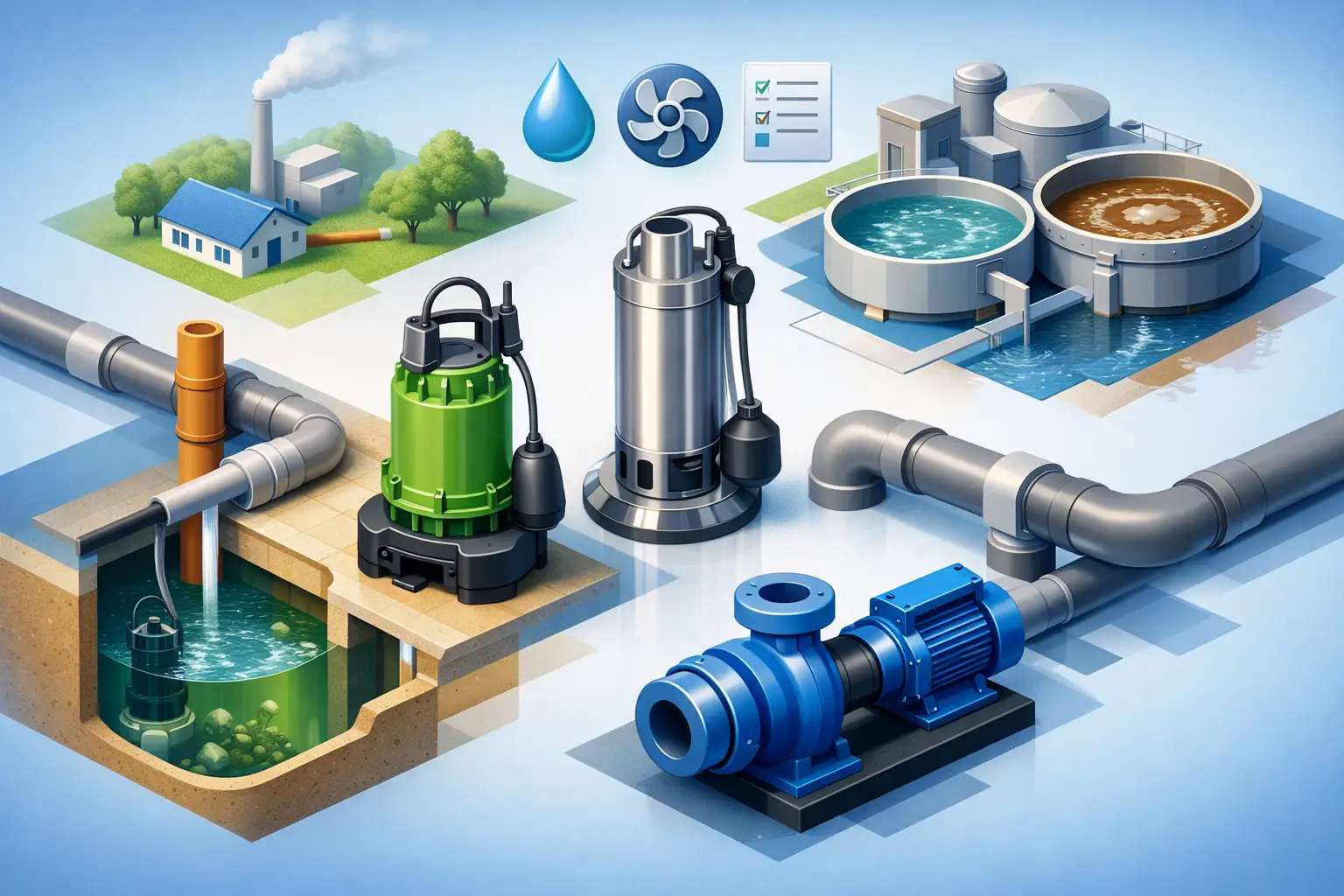
Choosing the wrong effluent pump usually does not fail all at once. It shows up as short cycling, poor drawdown, nuisance alarms, overloaded circuits, or a tank that never quite keeps up during peak use. That is why an effluent pump selection guide matters. The right pump is not just about horsepower. It is about matching the pump curve, total dynamic head, control method, and solids handling limits to the actual system.
Effluent pumps are designed for gray water or clarified wastewater with small suspended solids, typically after solids have settled in a septic or dosing tank. They are not the same as sewage pumps, and treating them as interchangeable is one of the most common selection mistakes. If the application includes raw sewage, stringy material, or larger solids, an effluent pump is the wrong category from the start.
What an effluent pump is supposed to handle
An effluent pump moves partially treated wastewater from one point to another, often from a septic tank to a drain field, mound system, sand filter, or secondary treatment area. In some applications, it is also used for light wastewater transfer where solids content is controlled and predictable.
That operating environment matters because effluent pumps are built around cleaner water than sewage pumps. Many models are optimized for higher head performance and efficient transfer rather than large solids passage. This often makes them a strong fit for pressurized distribution or longer discharge runs, but only if the wastewater quality matches the pump design.
If you are replacing an existing unit, start by confirming that the current installation really is an effluent application. A surprising number of replacement issues come from a pump that was misapplied years earlier, then replaced with the same wrong style again.
Effluent pump selection guide: start with the system curve
The most reliable way to choose an effluent pump is to work from the system requirements backward. That means identifying the flow rate you need and the total dynamic head the pump must overcome.
Flow is usually measured in gallons per minute. In a residential septic dosing application, required flow may be based on daily design volume, dosing frequency, and field layout. In a light commercial setting, peak demand patterns can matter more. Selecting too much flow can be just as problematic as too little. Oversized pumps may cause rapid dosing, turbulence in the tank, unnecessary power draw, and reduced control over field distribution.
Head is where many selections go off track. Total dynamic head is not just the vertical lift from the tank to the discharge point. It also includes friction loss through pipe, fittings, valves, and check valves, plus any pressure requirement at the destination. A pump that looks adequate on elevation alone may underperform once the full piping system is considered.
This is why pump curves matter. A pump should operate near the intended duty point, not at the extreme left or right edge of its curve. If the duty point lands too far off the efficient operating range, performance and service life both suffer. For buyers comparing models, the curve tells you far more than horsepower alone.
Calculate total dynamic head before you compare pumps
A basic head calculation starts with static lift, then adds friction loss from the discharge piping. Pipe diameter has a major effect here. A smaller pipe may be easier to install or may already be in place, but it increases friction loss and can push the system into a higher-head condition than expected.
Check valves and elbows also add resistance. So do long horizontal runs, even when elevation change is small. In pressure-dosed septic systems, distribution pressure requirements may add another layer. If you are replacing a failed pump in a system that struggled to keep up, the original head estimate may have been too low.
There is also a trade-off between pump sizing and piping changes. In some cases, increasing discharge pipe size reduces friction enough to allow a smaller, better-matched pump. In other cases, the piping is fixed and the pump must be selected around it. The right answer depends on whether you are doing a new installation or a replacement in an existing basin or tank.
Solids handling limits are not optional
An effluent pump selection guide should always include solids handling because this is where category errors become expensive. Effluent pumps are generally intended for smaller suspended solids than sewage pumps. If the wastewater stream includes wipes, raw sewage, fibrous debris, or larger waste solids, you need to reevaluate the application.
Even within the effluent category, solids passage ratings vary. That matters if the tank is not performing ideal separation or if upstream use patterns are inconsistent. A pump with insufficient solids handling may clog more often, lose performance, or fail prematurely.
This is also why basin or tank condition matters. A damaged baffle, poor settling, or unusual inflow can change what the pump sees in normal operation. If a site has a history of clogging, do not assume the solution is simply more horsepower.
Power, phase, and controls need to match the site
Many replacement projects stall because the pump selection starts with hydraulics but ignores electrical and controls. Voltage, phase, amp draw, breaker size, and controller compatibility all have to line up with the site.
In residential applications, most installations are single phase, often 115V or 230V. Commercial and multi-unit properties may involve different power configurations, and that can narrow the field quickly. A pump that fits the hydraulic requirements but exceeds available electrical capacity creates a different problem instead of solving the first one.
Control strategy matters just as much. Some effluent pumps run with a simple piggyback float switch. Others are paired with separate float trees, control panels, or more advanced monitored systems. If you are replacing only the pump, verify whether the existing control method is still appropriate, whether the switch rating matches the motor load, and whether the system needs alarm integration.
For higher-reliability applications, controller-based systems offer better visibility and can reduce nuisance issues tied to float misalignment or inconsistent switching. That is especially relevant where uptime matters, such as rental properties, managed facilities, or sites with limited service access.
Replacement selection is not just model-for-model
When replacing an existing pump, matching horsepower and discharge size is only the beginning. You also need to confirm the impeller style, cord configuration, switch arrangement, and dimensional fit within the tank or basin.
A common mistake is assuming any pump with the same horsepower will deliver the same performance. It will not. Two 1/2 HP effluent pumps can have very different curves, solids handling capabilities, and shutoff head. If the original pump was selected for a specific dosing field or pressure line, the replacement needs to meet that same duty point.
Physical fit can also become an issue in packaged systems. Discharge height, base dimensions, rail compatibility, and float clearance all affect whether the replacement will install and operate correctly. This is one reason specialized suppliers such as SumpDirect are useful in replacement scenarios - the technical details matter more than broad category labels.
When to size up, and when not to
There are times when moving to a larger pump makes sense. If the system has been expanded, the discharge run has changed, or the original pump consistently failed to meet demand, a higher-capacity model may be justified.
But upsizing is not a default fix. A larger pump can increase velocity, reduce dose control, create more wear from rapid starts, and expose control components to loads they were not designed to handle. In septic dosing systems, too much pump can also work against the treatment design.
A better question is whether the existing duty point has changed. If it has not, then a correctly matched replacement is usually better than a larger one.
Effluent pump selection guide for long-term reliability
The best pump on paper still depends on installation and maintenance. Check valve placement, venting, float spacing, and basin cleanliness all affect real-world performance. So does the quality of the control system and whether alarms are present and working.
For buyers focused on reliability, look beyond the pump alone. Consider whether the application needs duplex operation, high-water alarm protection, or backup power planning. An effluent pump may be handling a relatively controlled wastewater stream, but the consequences of downtime can still be serious.
Material construction also deserves attention. Cast iron pumps are common for durability, but not every environment places the same demands on the housing, seals, or motor design. If the site has long run times, high cycling frequency, or a history of harsh service conditions, that should influence the selection.
The right choice comes from matching the pump to the system you actually have, not the one you assume is there. If you start with wastewater type, verify the duty point, confirm electrical and controls, and account for installation constraints, the pump selection becomes much more straightforward. That extra time up front is usually cheaper than one avoidable service call after another.