
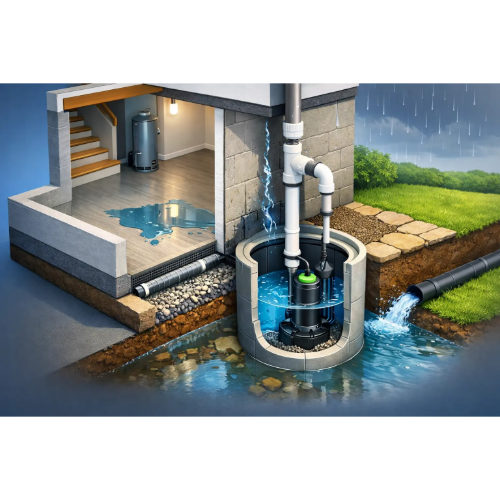
Basement Waterproofing Sump Pump System Guide
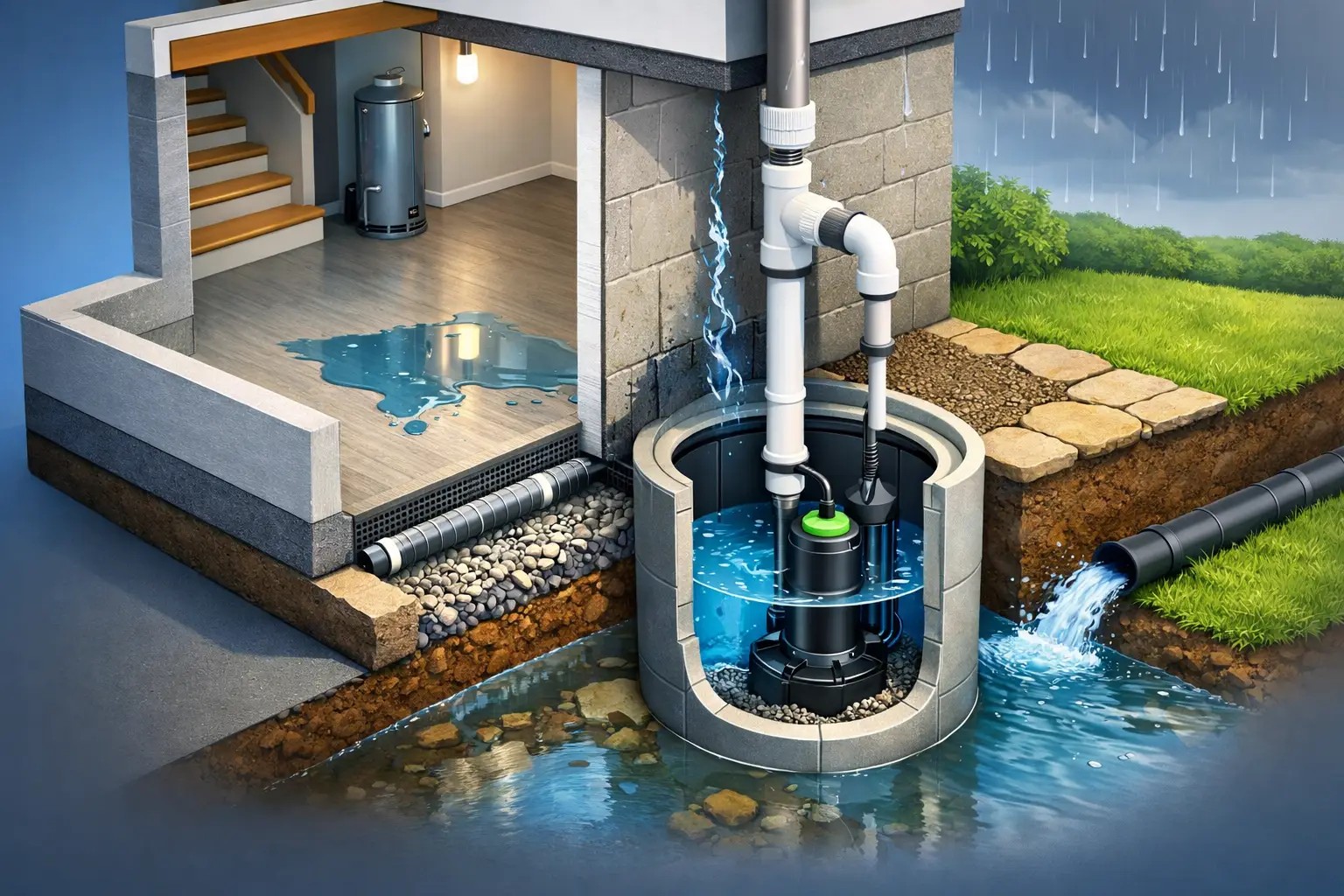
A wet basement usually starts quietly. A damp wall after heavy rain, a musty smell near a finished corner, or water collecting where the floor meets the wall are early signs that groundwater is finding a path inside. In many homes, the most reliable response is a basement waterproofing sump pump system designed to collect and remove that water before it reaches the living space.
This is not just about putting a pump in a pit and hoping for the best. A sump system works only when the basin, pump, switch, discharge line, check valve, and backup protection are matched to the water conditions in the home. If one part is undersized or poorly configured, the whole system becomes less dependable right when it is needed most.
What a basement waterproofing sump pump system actually does
A basement waterproofing sump pump system manages groundwater pressure beneath and around the foundation. In a typical interior waterproofing setup, water is directed through a drain tile or perimeter drainage channel into a sump basin. Once the water level rises to a set point, the pump activates and sends the water through a discharge line away from the structure.
That setup solves a specific problem. It does not stop rain from falling or eliminate hydrostatic pressure on the exterior foundation wall. What it does is give that water a controlled collection point and a mechanical path out of the basement area. For homes with recurring seepage, seasonal water table issues, or below-grade living space, that controlled path is often the difference between a dry basement and repeated cleanup.
The details matter. A high-capacity pump may sound like the obvious answer, but more power is not always better. If the basin is too small, the switch is poorly placed, or the discharge piping is restrictive, pump performance can still fall short. System design has to account for flow rate, lift, cycle frequency, and backup needs.
The core parts of the system
Every basement waterproofing sump pump system includes a few essential components, but the exact configuration depends on the application. The basin is the collection point. It needs enough capacity to manage inflow without forcing the pump into rapid short cycling. The primary sump pump handles normal groundwater conditions and should be selected based on required flow at the actual vertical lift and discharge run, not just the horsepower printed on the label.
The switch or controller determines when the pump turns on and off. This part is often overlooked, but it directly affects reliability. Mechanical float switches are common, while electronic controllers and sensor-based systems can offer more precise activation and additional protection features. In higher-demand or professionally specified systems, controller-based packages often improve monitoring and reduce common switch failure issues.
The check valve prevents discharged water from falling back into the basin after each cycle. The discharge line moves water away from the home and must be routed so it does not recycle toward the foundation. A properly configured lid can also matter, especially where radon, odor control, or safety is a concern.
Then there is the backup system. For many properties, this is not optional. Basement flooding often happens during storms, and storms frequently bring power outages. A battery backup pump or backup controller package helps keep the system operating when the primary pump loses utility power or cannot keep up with inflow.
Why sizing is where most problems begin
The most common mistake is assuming any sump pump will handle any basement water problem. It will not. Pump selection starts with how much water enters the basin and how far that water must be lifted and discharged. A pump rated for strong performance at low head can deliver much less at a higher lift. That is why real system sizing should look at performance curves, not just nominal horsepower.
A second issue is underestimating peak conditions. A basement may seem manageable during moderate rain but overwhelm the pump during spring thaw or a major storm event. If the system is sized only for average conditions, it may fail during the exact week it matters most.
Oversizing has trade-offs too. A pump that empties a small basin too quickly may cycle too often, increasing wear on the motor and switch. In some cases, a larger basin, a different switch range, or a controller-based package is a better fix than simply moving to a bigger pump.
For property managers and contractors, replacement selection creates another sizing challenge. A failed pump should not be replaced by matching appearance alone. Discharge size, voltage, controller compatibility, basin dimensions, and required duty point all need to line up. This is where a specialized supplier with actual category depth is more useful than a generic shelf comparison.
Primary pump versus backup protection
A single pump can be adequate in a low-risk basement with modest groundwater and consistent utility power. In many real-world applications, though, redundancy is the smarter choice. Finished basements, homes with frequent outages, and properties with high water tables all benefit from backup protection.
The primary pump should be selected for routine operation. The backup system is there for power loss, primary pump failure, switch failure, or inflow that exceeds normal capacity. Battery backup systems vary widely in design. Some are compact emergency pumps intended for intermittent use, while others are more integrated packages with advanced controllers, charger systems, and alarm capability.
Runtime matters here. A backup system is only as useful as its battery capacity under actual pumping conditions. Buyers often focus on the pump but ignore the battery and charger specifications. That is a mistake, especially in regions where storms can knock out power for extended periods. Matching backup runtime to local outage risk is just as important as selecting the primary pump.
Controls, alarms, and monitoring are not just accessories
The switch is one of the highest-failure components in any sump setup. That is why control strategy deserves more attention than it usually gets. Basic tethered or vertical floats can work well when properly installed, but they need enough basin clearance and can be affected by obstruction, debris, or tight pit geometry.
Electronic controllers and sensor-based systems can provide tighter activation ranges, audible alarms, and in some configurations, more dependable operation over time. For higher-value finished spaces or commercial applications, alarms should be viewed as part of the protection package, not as an add-on. High-water alarms, charger alarms, and controller alerts can give the owner time to act before flooding occurs.
This is one area where SumpDirect’s specialized product focus makes sense for buyers who need exact controller families, compatible replacement parts, or complete backup packages rather than a one-size-fits-all recommendation.
Installation details that affect performance
Even a correctly sized system can underperform if the installation is careless. The basin should be positioned and set to collect water efficiently from the interior drainage system. The pump needs stable placement and enough clearance for the switch to move freely. The discharge line should minimize unnecessary restriction, and the check valve should be placed in a serviceable location.
Outside the home, discharge termination matters. Water should be routed far enough from the foundation to avoid reentry into the drainage zone. In colder climates, installers also need to think about freeze protection and whether exterior piping layout could create blockage in winter.
There is also a practical difference between new installation and retrofit work. In a retrofit, existing basin size, pipe routing, lid design, and electrical access may limit equipment choices. That does not mean the best answer is to force-fit a familiar pump. It means the system should be evaluated as a whole so the replacement actually matches the site conditions.
Maintenance is what keeps the system from becoming a surprise
A sump system is easy to ignore because it sits out of sight until something goes wrong. That is exactly why maintenance should be scheduled before the rainy season. At minimum, the basin should be inspected for debris, the pump should be tested, the switch activation should be verified, and the discharge path should be checked for obstruction.
Battery backup systems need even more attention. Battery condition, charger status, cable connections, and alarm functions should all be reviewed. Batteries are consumable components, not install-and-forget parts. If the backup system is several years old, replacement timing should be considered before it is tested by an actual outage.
For replacement parts, compatibility matters. A switch, controller, sensor, or charger that looks close enough may not behave the same way in service. Matching the exact system requirements reduces nuisance cycling, communication issues, and premature failure.
When a sump pump system is the right answer - and when it is only part of one
A basement waterproofing sump pump system is often the correct solution for recurring groundwater intrusion, but not every water problem starts below the slab. Some wet basement complaints come from poor grading, overloaded gutters, short downspouts, window well leaks, or surface runoff at an entry point. In those cases, exterior drainage corrections may need to happen alongside sump system upgrades.
That is the trade-off homeowners sometimes miss. A stronger pump can manage more incoming water, but it does not fix the reason that water is collecting near the foundation in the first place. The best results usually come from treating the sump system as one part of a broader water-management plan.
If your basement has shown even minor signs of seepage, the right time to evaluate the system is before the next storm, not during it. A well-matched setup does more than remove water. It gives you predictable protection when the basement is under pressure.